
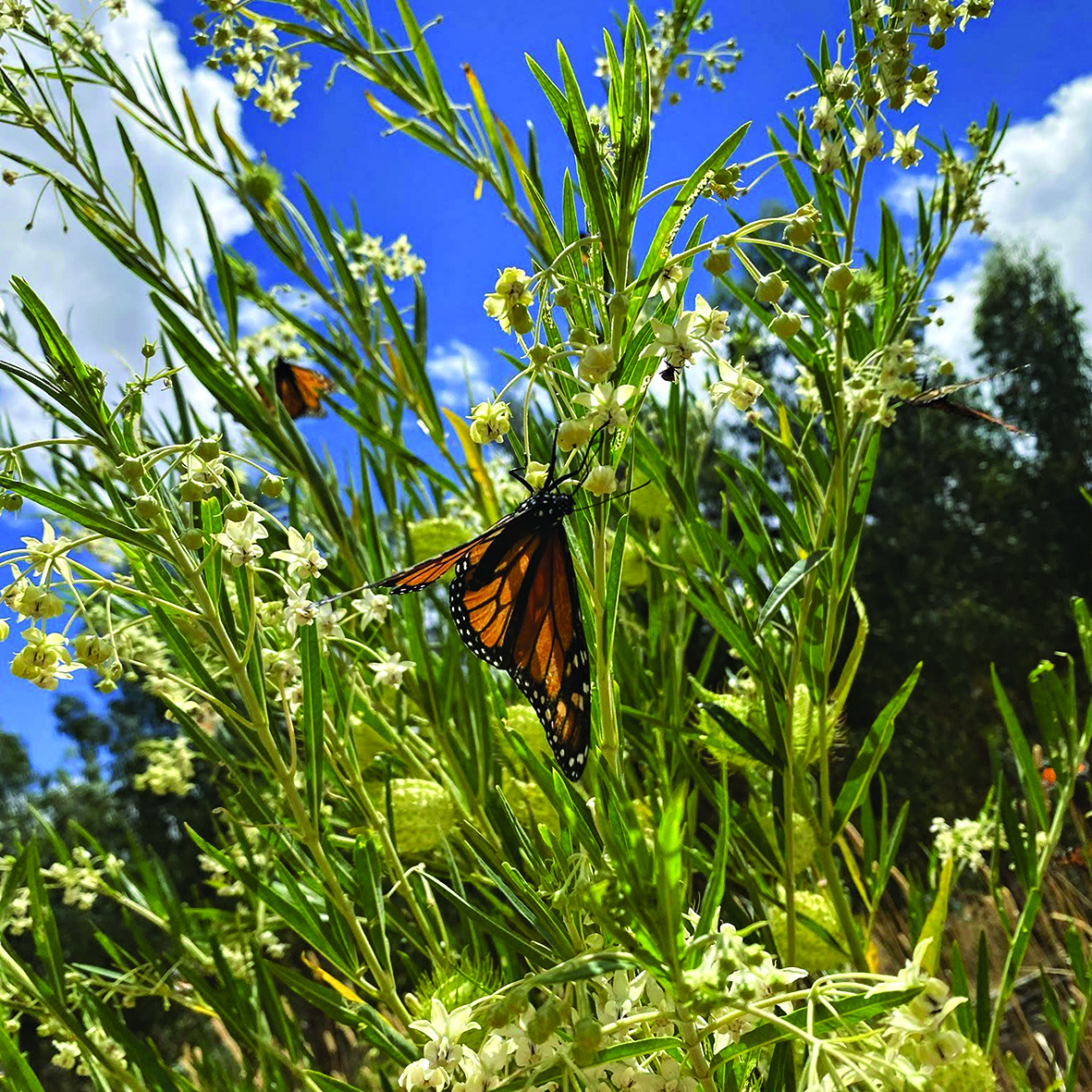
Are wanderer butterflies hanging around a lanky weed with huge seed pods on your property?
It may look beautiful, but these butterflies indicate the presence of a plant that causes serious environmental damage and poses a major agricultural risk.
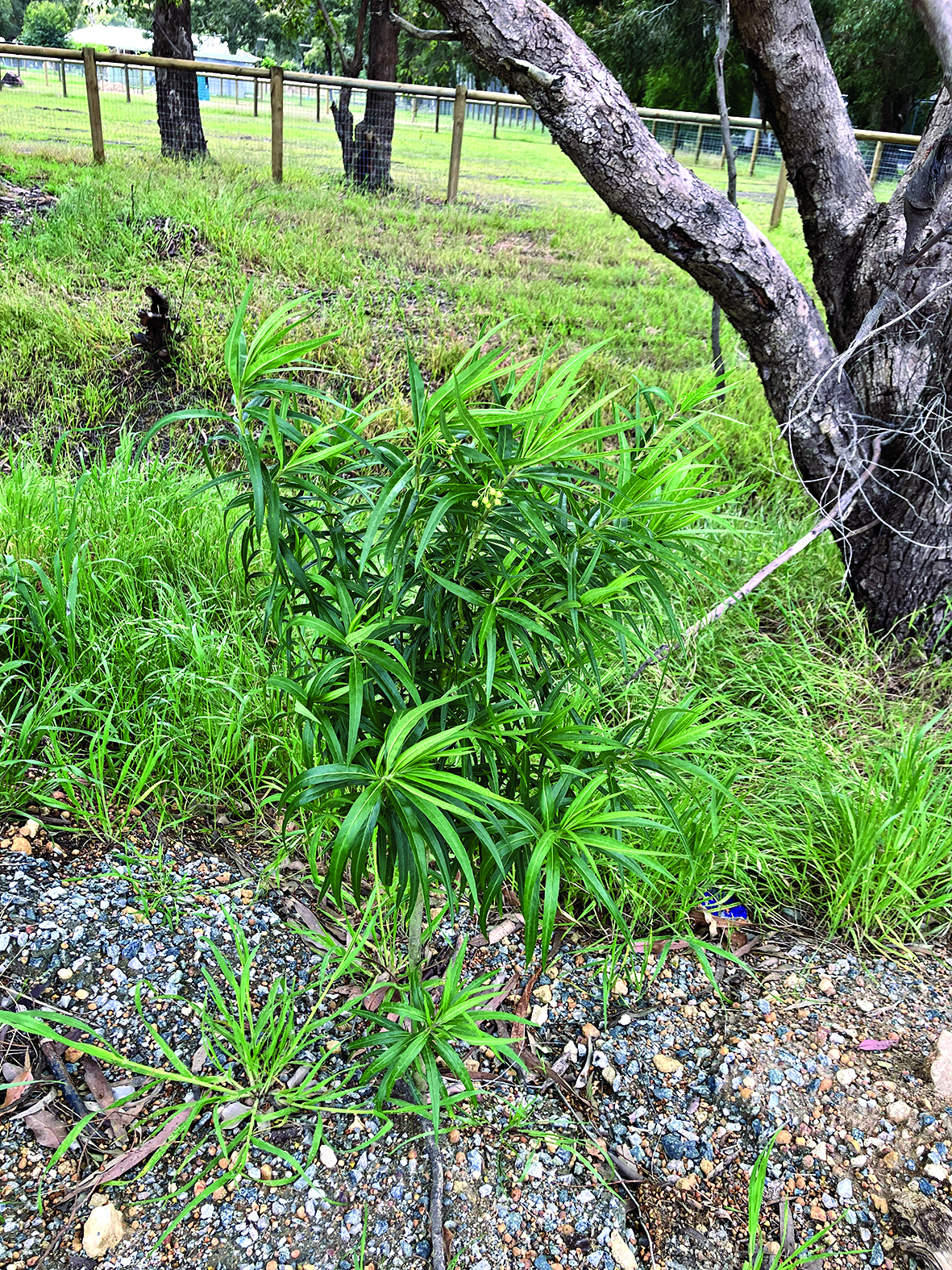
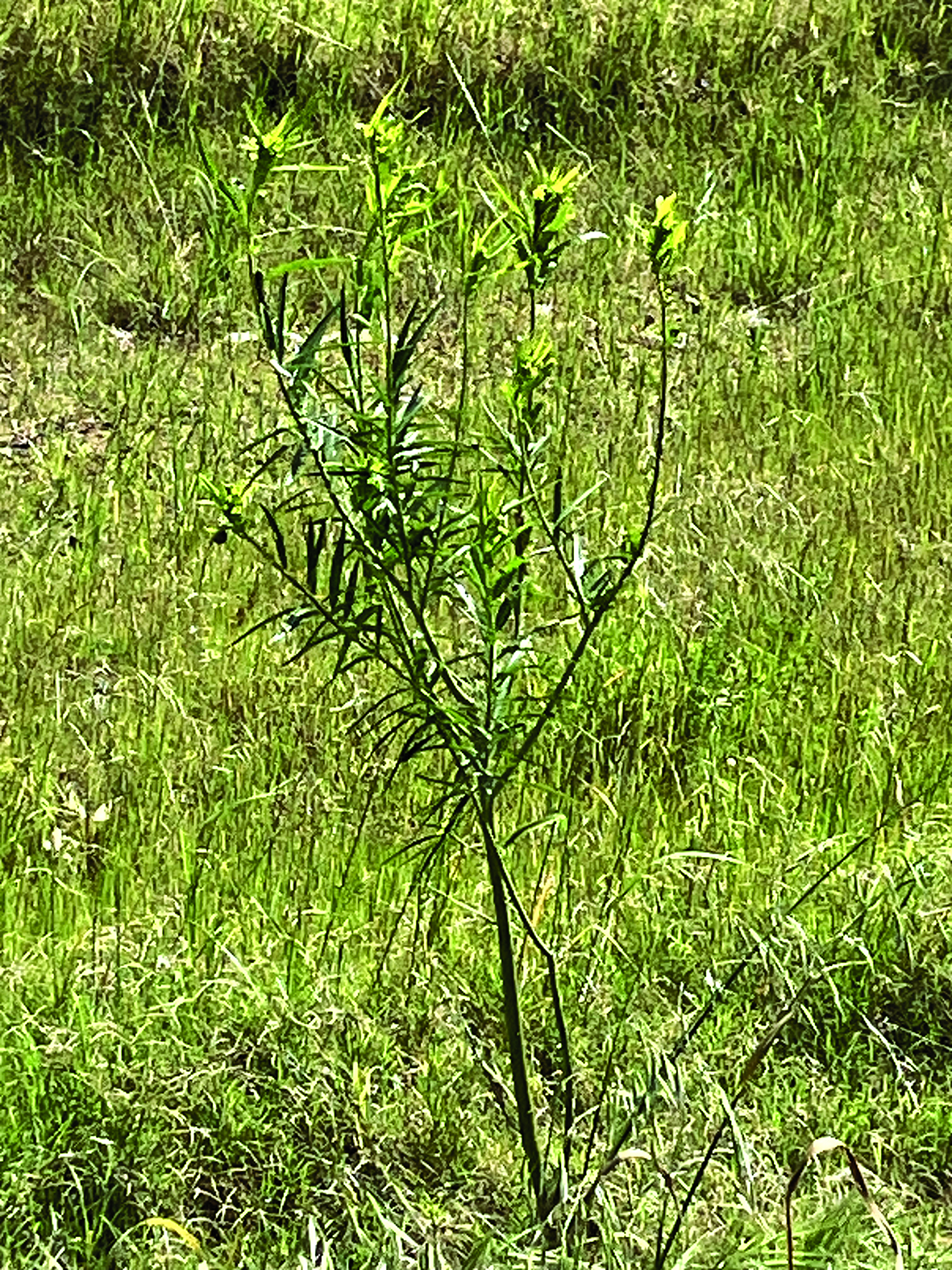
The plant is narrow-leaf cotton bush, also known as milkweed or swan plant.
Cottonbush plants are food for wanderer caterpillars, and the toxins they ingest from the plant make them unpalatable to predators. Unfortunately, cotton bush’s toxicity can also be deadly, and has been linked to deaths in sheep, cattle and chooks. It is also toxic to humans, causing severe gastroenteritis.
The plant is native to southern and eastern Africa, as well as part of the Arabian Peninsula. It was first recorded and declared a noxious weed in WA in 1923, though it was likely brought to Australia earlier in the 19th century as an ornamental garden plant from South Africa. It would then have escaped from gardens into the bush.
Cottonbush is highly prevalent from Chittering and the Swan Coastal Plain down to the south coast, with dense concentrations along the Darling Scarp from Perth to Bunbury and Collie. It is also widespread in various coastal and subcoastal areas throughout NSW, Victoria, Tasmania and the south-east of Queensland.
A substantial amount was formerly found within and around the Byford township, though with the construction works resulting from the Tonkin Highway Extension, much of the empty land that hosted it has been repurposed. Nonetheless, with spring arriving, many young plants have sprouted in said area.
The plant is often found in disturbed land, like roadsides, neglected and low fertility pastures and ploughed firebreaks, though it is common to find clusters of it near waterways and wetlands.

The plant’s pale green, balloon-like pods are packed with seeds attached to silky white fluff, allowing them to travel long distances on the wind and water.
Cotton bush can form dense thickets, compete with native plants and block waterways. Given the right conditions, cotton bush can grow very tall, to an almost tree-like state.
Further, young plants may accidentally contaminate hay or chaff, which may then poison livestock.
Wanderer butterflies might look lovely, but allowing their food plant to spread poses a deadly risk to native wildlife, pets and livestock. If you have cotton bush on your property, pull it up before it goes to seed and throw it in a sealed bag into the bin.
Native butterflies can be encouraged by planting local species of banksias, peas, conostylis, native sedges and melaleucas.