
Cat Haven is celebrating 65 years of caring for homeless cats, but the organisation says the challenges it faces today are as serious as ever.
The charity, founded in 1961, now cares for more than 8,500 cats each year at a cost of more than $9.3 million. It says just $150,000 of that funding, about 1.6 per cent of its operating costs, comes from the State Government.
Cat Haven CEO Roz Robinson said the organisation had seen growing pressure in recent years, with more people surrendering cats because of the cost of living and the struggle to find rental housing that accepts pets.
“We have seen owner surrenders due to not being able to get affordable rental which will take cats,” she said.
“Cost of living pressures, do you feed the kids or the cat? You can’t feed both, so the cat comes into us.”
Ms Robinson said kitten intake had increased by 15 per cent over the past year despite mandatory cat desexing laws being in place for more than a decade.
She said the issue was not spread evenly across Perth, with some suburbs experiencing much higher numbers of stray and surrendered cats.
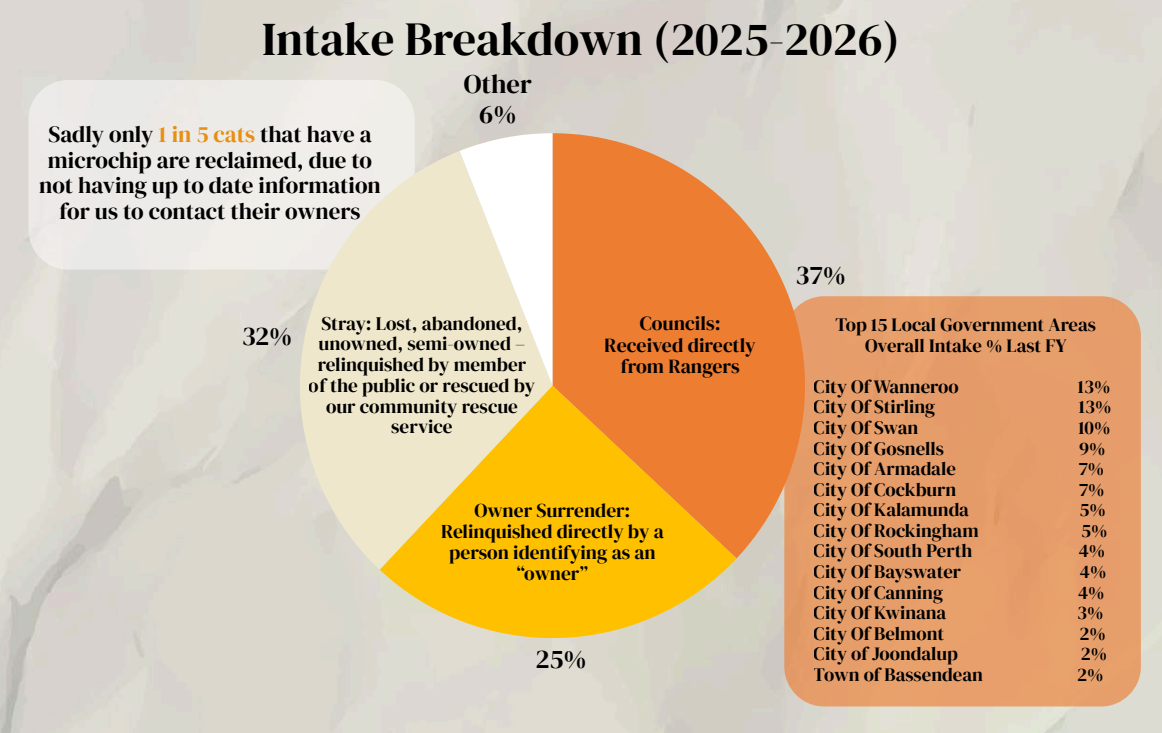
“There are most definitely suburbs within the metropolitan area where it is evident there is a major cat issue and it almost always relates to those suburbs with socio-economic issues,” she said.
Cat Haven believes many unwanted litters could be prevented through better public awareness and more affordable desexing services.
Ms Robinson said many people were unaware that cats must legally be desexed by six months of age, while female cats could reach sexual maturity as early as four months.
She also said some owners wanted to desex their pets but could not afford veterinary costs.
To reduce the number of homeless cats, Cat Haven is calling for long-term, targeted community desexing programs similar to those introduced in other states.

“A one-off campaign is no use,” Ms Robinson said.
“It would have to be five to 10 years to really reduce the number of cats in the state.”
She encouraged residents to report stray cats to their local council or bring them to Cat Haven instead of leaving them on the streets.
“Whatever you do, take action. Don’t turn a blind eye and leave it on the streets to fend for itself,” she said.
Cat owners were also urged to desex and contain their pets, while people unable to adopt could consider becoming foster carers.
Over the past 65 years, Cat Haven estimates between 750,000 and one million cats have come through its doors.
Beyond rehoming cats, the organisation has funded desexing programs for people who cannot afford them, provided emergency boarding for people escaping domestic violence and run a nursing home program that brings cats into aged care facilities.
Ms Robinson stated that governments needed to take a greater role in tackling cat overpopulation.
“We need change and we need it now,” she said.