
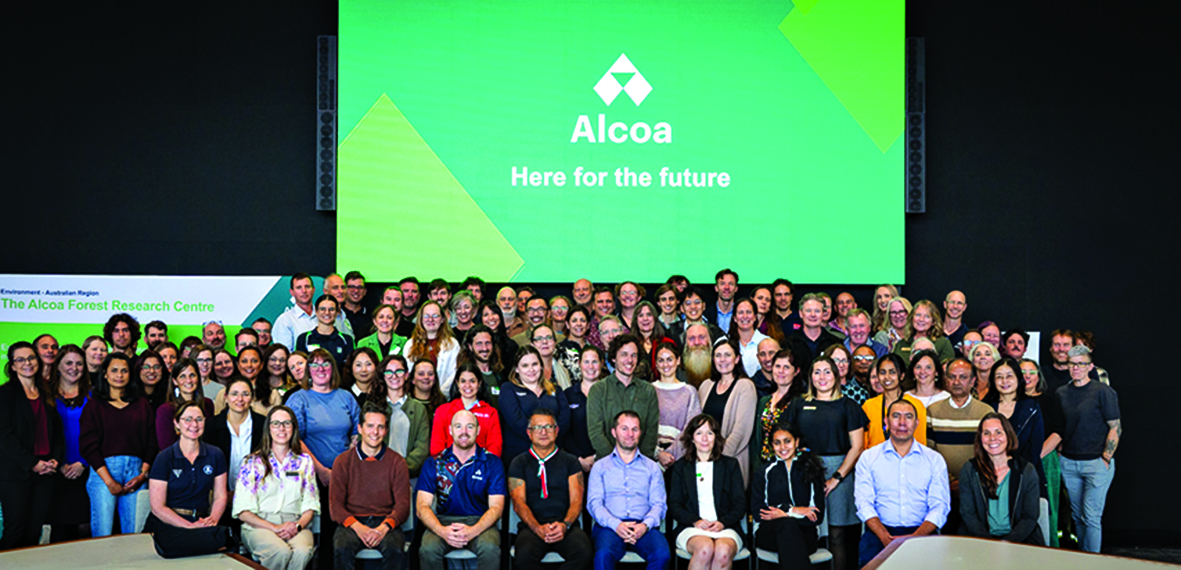
Alcoa Australia recently conducted an Environmental Symposium at Murdoch University.
Convened by Alcoa’s Forest Research Centre, the event brought together many WA researchers and practitioners, as well as academics and environmental professionals, to hear about latest studies, continuing research and completed projects.
“A key focus of the symposium was the Northern Jarrah Forest and efforts to further understand and improve its conservation, rehabilitation, and the impacts of climate change, with some further-afield projects also showcased,” said an Alcoa WA spokesperson.
“Presenters took attendees on a journey through flora, fauna, water, landscape management and Traditional Owner knowledge, with a broad range of presentations and insights.”
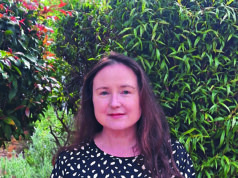
South West NRM CEO Dr Manda Page discussed some of the collaborative projects the conservation group undertakes with landholders, Traditional Custodians, research institutions, NGOs, community groups, industry, and government to improve conservation and restoration outcomes across the South West region.
Dr Page highlighted successes and ongoing efforts to protect and support recovery of threatened species including the Hairy Marron (Cherax tenuimanus) and the Western Swamp Tortoise, mitigation of threats, research into living firebreaks, and enhancements in sustainable agriculture.
Alcoa Research Manager Dr Lucy Commander discussed some of the accomplishments of the Forest Research Centre in its first year of operation, including growth of the team to bring a breadth and depth of knowledge and experience, and highlighted some of the 37 projects that were completed, commenced, and continued from before the centre’s establishment.
According to Dr Commander, the centre is helping connect research, operational practice and environmental stewardship through partnerships that support continuous improvement in environmental management and rehabilitation.
Dr Dave Coates from the Department of Biodiversity, Conservation and Attractions provided some insights gained over his extensive career in conservation, restoration genetics and evolutionary biology.
UWA PhD candidate Andrea Piccinini shed light on Australian wishbone spiders, a species about which little was understood prior to recent research, while Dr Justine Barker from Alcoa provided insights into the ways in which the chuditch, or western quoll, use post-mining landscapes where rehabilitation work has been undertaken.

Dr Alan Cottingham from Murdoch University’s Harry Butler Institute explained the benefits of biomonitoring over traditional testing methods to determine waterway health. His BioSentinel Project uses mussels with live monitoring sensors attached, providing real-time indications of water issues each time the mussel shells close.
Dr Commander said the Alcoa Environmental Symposium had grown considerably in the four years the company had hosted the event.
“What started as an opportunity for direct collaborators and Alcoa practitioners to meet has expanded into a major conference on the environmental research calendar, bringing industry, academia and government together to share knowledge and focus our mutual attention on continuous improvement and adaptive management,” Dr Commander said.
“We are all working together on world leading environmental research and a focus on balancing responsible land use with the need for conservation and rehabilitation.”
However, WA ecologist and bee expert Kit Prendergast raised concerns that Alcoa’s symposium neglected to recognise the issue of bee populations, and how they are impacted by operations.
“I have conducted native bee surveys on behalf of DBCA in the Northern Jarrah Forest. Despite revealing a rich diversity including undescribed species, native bees have not been considered in any impact assessments nor offsetting,” Ms Prendergast said.
“We are facing a crisis in native bee conservation, the critical pollinators that sustain plant life in the Jarrah forest. They are being completely ignored.”