
Following the protest early this year by the Darling Downs Residents’ Association (DDRA), as reported in The Examiner’s February 26 edition, the Association’s president Bruce Hilliard has provided an update on their quest for a safety wall.
As major roadworks in the area have progressed, the south section of the popular Comic Loop Trail has become largely exposed to traffic, raising fears that horse behaviour will be negatively influenced by traffic flow.
Bruce Hilliard, having served in his role for seven years, is particularly worried about a disaster occurring if a horse is spooked by a loud truck passing by, especially as they approach the upcoming round about and apply their noisy jake brakes.
“This is a serious concern. With the upgrades to Thomas Road occurring right next to Comic Loop Trail, the amount of traffic, especially trucks, will only increase. What’s even worse is that the trees that used to work as a natural sound barrier have now been cleared, meaning the trail is completely exposed to noise from Thomas Road,” he said.
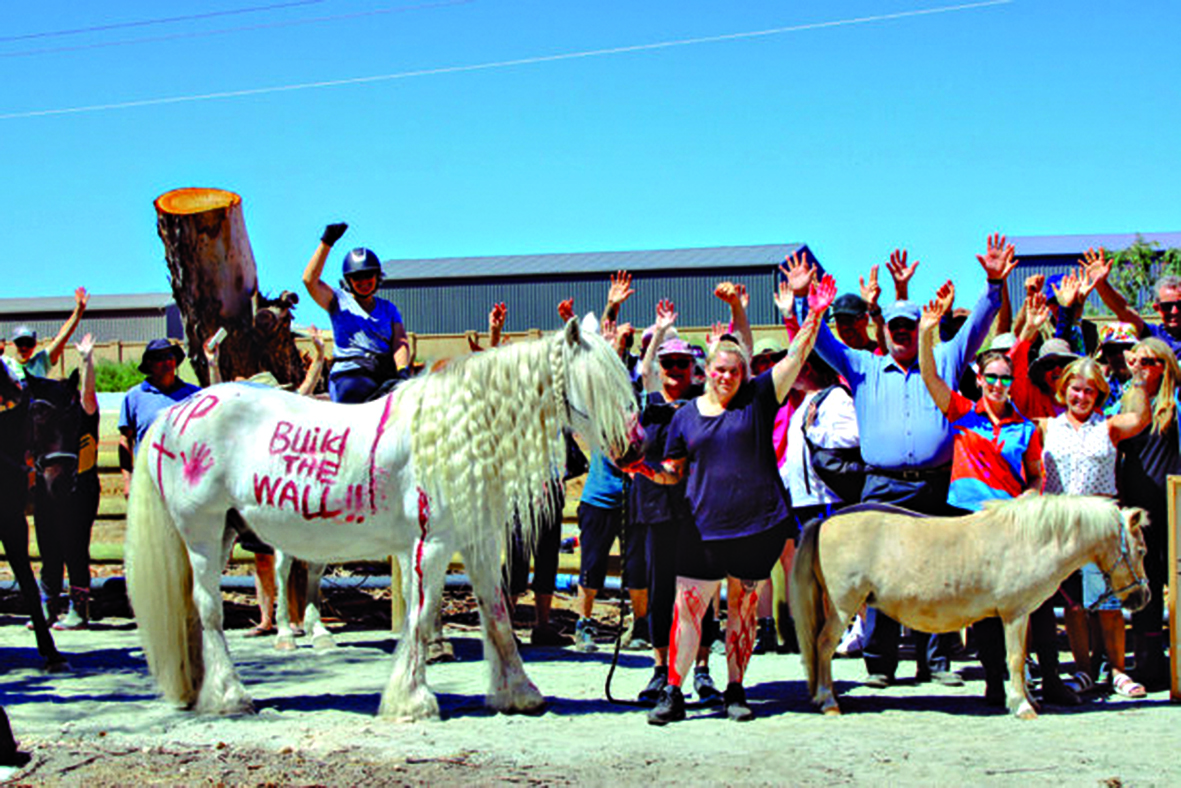
“There are such strong feelings about this. If you look at the February protest, 135 people turned up. They’re seriously worried of a tragedy waiting to happen, and a totally avoidable one at that. People came all the way from Harvey and Brigadoon to make their point, as people from even those distant locations use Darling Downs’ equine trails.”
According to Mr Hilliard, Comic Loop remains one of the most utilised sections of the area’s trails. One of its noteworthy uses is by a Riding for the Disabled group.
“It needs to remain a safe environment for an activity like that to occur. The gentleman up the road runs this group called Eq Centera Inc., which teaches a lot of disabled youngsters how to ride, because it helps them to develop self-control and gives them joy. In the past, they used this trail all the time but are now worried to.”
With the jurisdiction for a sound wall resting with Main Roads WA, Mr Hilliard described a long campaign of pushing for some sort of sound barrier to be built but has been frustrated with the result.
“I was sent a number of studies from Main Roads WA, all of which state that a safety wall is not required by logistics or policy. I have, however, not seen the studies. At a later meeting with representatives from the organisation, the study findings were simply summarised superficially.
“They have told us that multiple safety assessments of that section of the trail have been made, and that there is no risk. However, this is simply not the reality.”
The DDRA has conducted its own research into feasible safety wall structures and materials.
“According to what we found, based on a study from the Department of Transport and Main Roads Queensland, a safety wall at this section would not have to be built from expensive materials at all. We’re looking for both a visual and noise barrier, which would prevent horses being spooked by noise and sound and consequently bolting unpredictably. Some form of relatively inexpensive precast concrete panels, brickwork, limestone blocks, transparent acrylic or timber would suffice.”
However, Main Roads WA said their assessments did not identify the need for an additional barrier.

“Safety has been considered throughout the planning and design of the Tonkin Highway Extension and Thomas Road (THETRU) Project through independent road safety audits, safety in design reviews, engineering design reviews, and multidisciplinary technical assessments,” a Main Roads spokesperson said.
“These processes consider the completed corridor and how the individual design elements work together to support safe outcomes for the community.
“The completed design will increase the distance between traffic and the trail and provides multiple layers of physical separation, including road safety barriers, changes in ground level, drainage and upgraded equine fencing. The road safety assessments did not identify a need for an additional wall at Comic Loop South.”
Main Roads said that a number of further measures are being implemented to ensure the best possible outcome for road users and horse riders is reached, through collaboration with the local Shire.
“We are finalising other practical improvements in consultation with the Shire and its Equine Advisory Group to the bridle trail, including mounting blocks, additional signage, and planting.
“Equestrian infrastructure also delivered through the project includes a Pegasus crossing, equine underpasses, and realigned bridle path connections.”
Main Roads provided background on the specific policy structures currently in place that regulate the erection of noise walls.
“Under State Planning Policy 5.4, noise walls are required where projects affect defined noise sensitive land uses such as homes, schools, and medical facilities. Equestrian trails within public open space are not classified as noise sensitive land uses.
“Independent acoustic modelling was undertaken and determined a noise wall was warranted between Tonkin Highway and Comic Loop West, but there was not a requirement “to extend the wall further east.
“In response to community feedback, Main Roads reviewed the feasibility of installing an additional barrier along Comic Loop South, including extensive independent safety assessment, which found the location did not present a demonstrated safety risk that would warrant a barrier.”
Mr Hilliard has expressed no intention of him, or the DDRA, ceasing their efforts.