
More than four kilometres beneath the ocean off Western Australia’s Ningaloo coast, scientists say there is still an underwater world Australians know very little about.
A Curtin University-led study exploring deep-sea canyons near Nyinggulu (Ningaloo) uncovered more than 200 species, including giant squid, deep-diving whales and marine life never before recorded in WA waters.
Researchers used environmental DNA, known as eDNA, to detect marine animals from traces of genetic material left behind in seawater.
Lead Researcher Dr Georgia Nester said the findings showed how much of the deep ocean remains unexplored.
“Detecting more than 200 species, including species never before recorded in Western Australian waters and many sequences that don’t closely match anything in existing databases, really highlighted how little we know about the deep ocean,” she said.
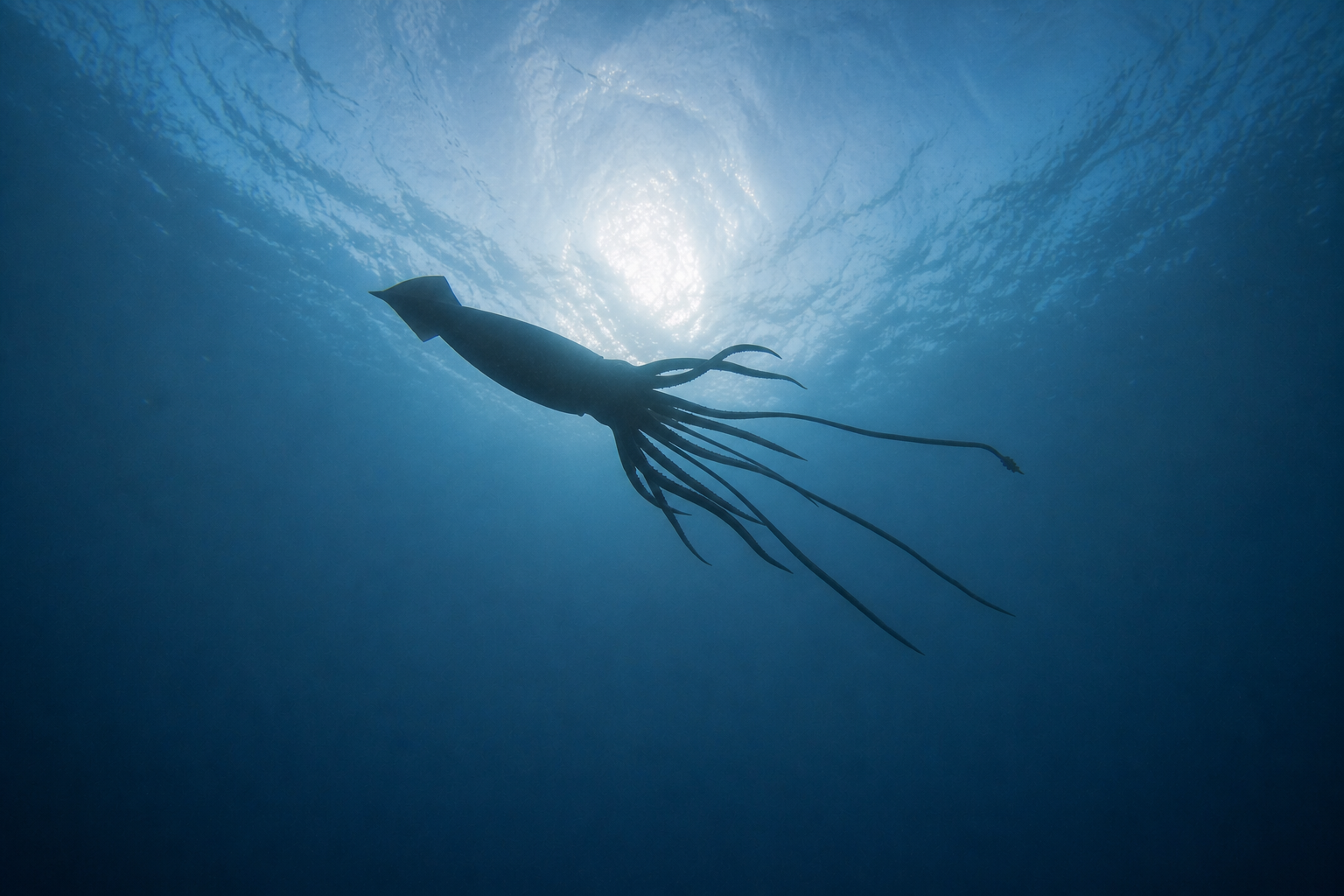
Among the discoveries were repeated traces of giant squid DNA found across six separate samples from two underwater canyons.
Dr Nester said the discovery was a major moment for the research team.
“Giant squid are one of those animals that capture people’s imagination because they’re so rarely encountered, especially alive in the wild,” she said.
“There hadn’t been a confirmed record from this part of Western Australia for more than 25 years, so detecting their DNA in multiple samples from two separate canyons was a really remarkable moment for the team.”
The study surveyed the Cape Range and Cloates submarine canyons, about 1200km north of Perth, at depths reaching more than 4.5km underwater.
Dr Nester said working at those depths came with major challenges.
“These canyons reach depths of more than 4 kilometres, so sampling requires specialised research vessels, remotely operated vehicles and sophisticated equipment,” she said.

“Every part of the process, from deploying instruments to retrieving samples without contamination, has to be carefully planned.”
Researchers say discoveries like these matter because deep-sea ecosystems are increasingly facing pressure from climate change, fishing and possible resource extraction.
Dr Nester said scientists still know very little about many of these habitats.
“The deep ocean is a huge part of Australia’s marine environment, but we still know remarkably little about it,” she said.
“These ecosystems are connected to the overall health of our oceans and they contain biodiversity found nowhere else on Earth.”
The team also found many genetic sequences that did not closely match anything currently listed in scientific databases.
That could mean some marine species in the area are still undocumented.
“It strongly suggests there’s a huge amount of deep-sea biodiversity still undocumented,” Dr Nester said.
Researchers hope the findings will help improve understanding of WA’s deep ocean and support future marine conservation decisions.