
Invictus Australia has expressed profound disappointment following the 2026–27 Federal Budget, which confirmed the complete withdrawal of Federal Government funding for the organisation’s national veteran sport and rehabilitation programmes.
According to the organisation, the decision will have immediate and far-reaching consequences, cutting off access to proven, community-based support relied upon by thousands of Australian veterans and their families for recovery, wellbeing and transition to civilian life.
“At a time when Australia continues to grapple with the findings of the Royal Commission into Defence and Veteran Suicide, and amid global instability underscoring the ongoing demands placed on Defence personnel, the removal of this funding represents a serious step backwards in the nation’s commitment to veteran wellbeing,” the organisation said.
Invictus Australia’s role within the veteran support system has been publicly recognised at the highest levels of government.
Speaking at the Invictus Australia Reception in April, Minister for Veterans’ Affairs and Defence Personnel, the Hon Matt Keogh MP, praised the ongoing efforts of the organisation.
“In my role as Minister I get regular feedback about the difference Invictus is making in building those foundations for so many veterans,” he said.
“Invictus is part of the broader veteran welfare system that we’re actively strengthening to better support veterans and families of veterans, especially through transition.”
The government’s recognition has also extended internationally.
Last year, the Minister travelled to the United Kingdom to meet with the Invictus Games Foundation, which oversees the global Invictus Movement, to better understand Invictus Australia’s leading role and its impact in driving outcomes beyond the Games themselves.
Invictus Australia’s approach has since been acknowledged as helping set a benchmark for sustained, community-based veteran support long after competition ends.
That recognition makes the decision to withdraw all Federal Government funding difficult to reconcile, according to Michael Hartung, CEO of Invictus Australia.
“To date, Invictus Australia has supported close to 30,000 veterans and families across the country,” he said.
“To have this support removed in full, with no transition or alternative funding pathway, is a devastating blow, not only to our organisation, but to the veterans and families who depend on these programmes to stay connected, well and alive.
“For many veterans, Invictus Australia is not a recreational outlet. It is, rather, a lifeline, supporting people to manage PTSD, anxiety and depression, rebuild purpose and routine, and reconnect with their communities. Removing this funding removes access to a proven pathway for recovery.”
The organisation believes the impact will be felt across veterans and families, local communities and sporting clubs, and Invictus Australia itself, many of whose staff are veterans or their family members.

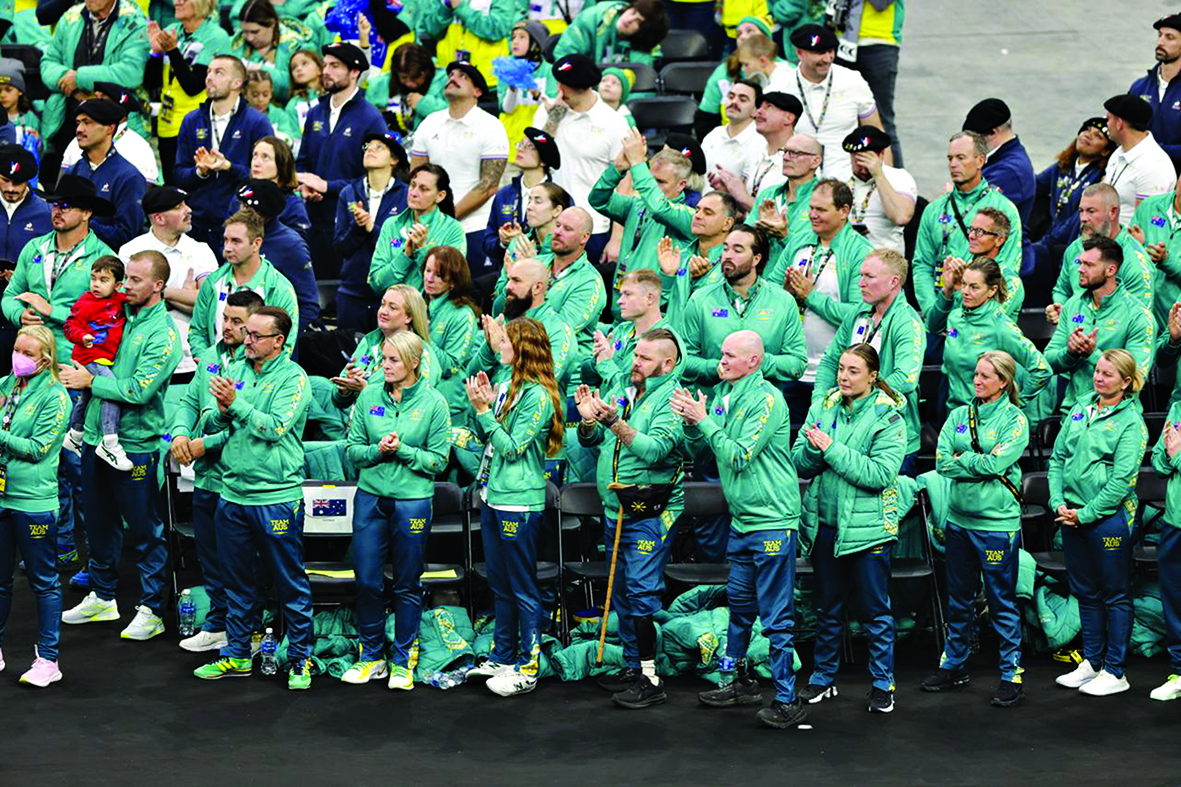
They feel it also places at risk opportunities for Team Australia, following the strongest ever response from wounded, injured and ill veterans applying to represent Australia at the Invictus Games Birmingham 2027.
Minister Keogh has previously highlighted the evidence behind Invictus Australia’s work.
“We know sport, particularly at the grassroots level, can have a powerful impact on the wellbeing of so many of our veterans,” he said.
He has also praised Invictus Australia’s evidence-led approach, including its partnerships with UNSW.
“Evidence-led, grassroots approach is part of the reason why Invictus has now impacted the lives of almost 30,000 veterans and families in this country,” he said.
Invictus Australia has additionally highlighted that the withdrawal of funding directly contradicts the Royal Commission’s call for stronger early-intervention, social connection and holistic support systems.
This follows their identification of sport-based, community-led initiatives as contributing to at least 34 of the Royal Commission’s 122 recommendations.
Statistics show that fifty-two per cent of Australian veteran families have experienced mental health challenges, including anxiety, depression or PTSD, in the past 12 months, and research cited by Invictus Australia shows that veterans who remain physically active have a 40 per cent higher likelihood of overcoming mental health challenges than those who are sedentary.
Economic modelling further demonstrates that a 10 per cent increase in physically active veterans could reduce mental health system costs by up to $230 million.
“With unmet need already at critical levels, this decision risks pushing vulnerable veterans further into isolation,” Mr Hartung said.
“We cannot say veteran wellbeing is a priority while removing support from one of the few national, evidence-backed models proven to deliver impact at scale.”
With the future of its national programmes now uncertain, Invictus Australia will urgently turn to the Australian public, philanthropic supporters and corporate partners to help bridge the funding gap.
Approximately six veterans a month continue to be lost to suicide.