The Shire of Serpentine Jarrahdale has recently released further information on the 9th February fire that damaged over 90 hectares of local bushland.
At a recap session hosted in March, residents were provided with an overview of the incident, the coordinated response, and ongoing recovery efforts.
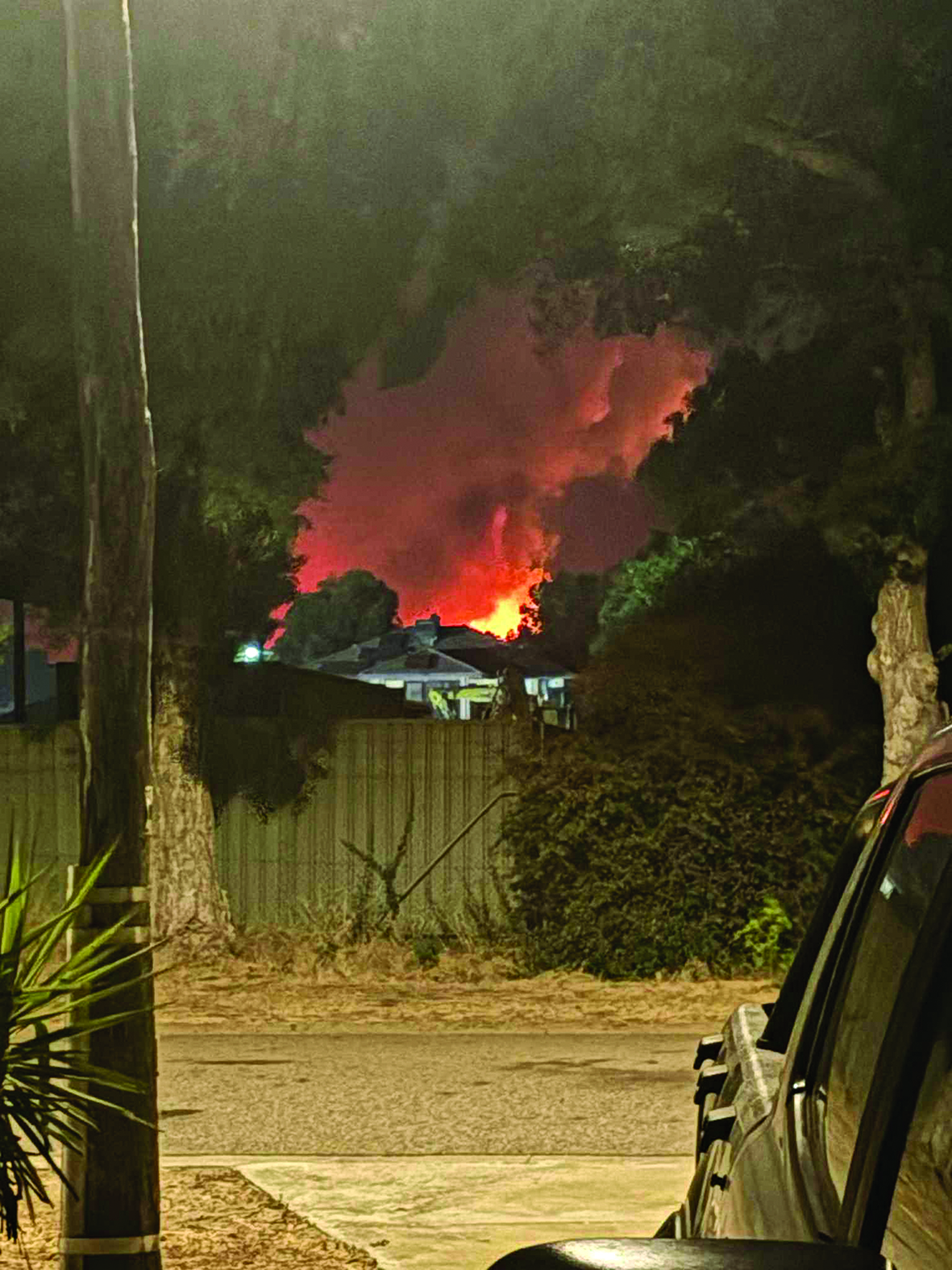
The shire has stated that: “The bushfire began in the early hours of Monday, 9th February and spread rapidly from Pruden Road across South Western Highway.
Approximately 90 hectares overall were impacted before the fire was contained.
It is suspected that the cause related to a stolen vehicle, but WA Police said they are are “still investigating.”
The success in containment was credited by the shire to the: “Swift, coordinated action by around 160 volunteer and career firefighters, supported by DFES, DBCA, WA Police, shire staff, the Departments of Communities and Justice, and local landowners. They successfully stopped the fire’s forward spread.
Importantly, there was no loss of life or property damage.”
Nonetheless, the event was felt by the local community, as there was a significant clean up that had to occur afterwards.
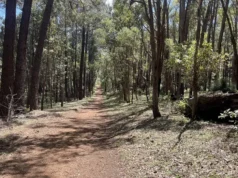
“Various recovery works, led by the shire and DBCA, have recently been completed. These include fencing replacement, track repairs and restoration of impacted areas.
“Daily patrols of the fireground continued until the incident was formally closed on 16 February.”
Early ecological recovery has already been described as visible, though the shire has stated that a controlled burn is required at Watkins Road Nature Reserve.
The recent debrief meeting acknowledged a significant number of concerns from the community.
Regarding alert systems, the shire stated that: “Using the Emergency WA app, you can set a watch zone and will receive loud and obnoxious alert tones ‘preset’ within the app for all levels of alert.”

Speakers drew attention to AusAlert, a new national emergency warning system that sends urgent messages to compatible mobile phones and other mobile devices in a specified area. Currently, it is in the testing phase and is due to begin operation from October 2026.
Concerns were also raised about weak mobile coverage in the area, though it was stated that: “the shire continues to work with other agencies, including telecommunications companies, to advocate for improved mobile coverage in the area.
Some attendees did not understand why the evacuation centre was in Byford, about 11 km away from the site of the incident, where approximately 20 people sought refuge on the evening.
The shire had this to say in response: “We have two evacuation centre sites, those being the Serpentine Jarrahdale Community Recreation Centre in Byford, and Clem Kentish Hall in Serpentine. Which site to open is determined in collaboration with the incident controller, the Department of Communities and the shire according to the particular incident.
“The Serpentine Jarrahdale Community Recreation Centre in Byford was selected as it was the most suitable location for the evacuation centre based on the information available at the time.”
When asked about Tonkin Highway Extension Alliance’s impact on road network and emergency access, it was stated that: “The shire has worked closely with the Tonkin Extension Alliance around Emergency Access Ways to ensure the project supports bushfire safety, particularly through planning suitable Emergency Access Ways (EAWs).
“This has included reviewing road layouts, providing input on EAW design and placement, and identifying where improved access can strengthen community evacuation and emergency response.”
Finally, when asked about what the shire can do about excess fuel on verges, the answer was that: “The shire manages verges where it affects public safety, essential infrastructure, drainage, or sight lines, and in key areas such as community facilities, parks and reserves. Outside of these circumstances, the shire does not routinely mow or slash verges fronting private or commercial properties.”
They have emphasised the boundaries between responsibility of local government and that of property owners.
“Managing fuel loads on these verges is primarily the responsibility of the adjoining property owner, including mowing, weed control and removal of debris to reduce fire risk and protect drainage systems.”
The remainder of the session consisted of educating attendees on bushfire plans, how to find information when a threat may be imminent, what to pack into an emergency kit for such an occasion and the Emergency WA warning system.