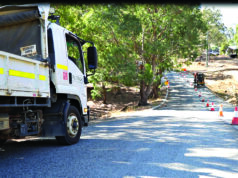


Several traffic management professionals working across Perth say routine road-related works in the City of Gosnells are taking significantly longer to approve than other councils.
They said the delays are causing extra costs, rescheduling and rising frustration across the industry.
The Examiner has spoken with multiple traffic management planners and designers who work with utility contractors across Perth.
All requested anonymity.
They say the challenge affects companies working on and around the road reserve for services such as power, water, gas and communications.
These works rely on traffic management plans, known as TMPs, which outline how road users and workers are kept safe.
“The timelines are beyond unacceptable,” one group said.
All companies said approval times in Gosnells are far longer than anywhere else in the metropolitan area.
Most councils return TMP approvals within five to ten business days, with some taking up to fifteen, according to them. Several companies said Gosnells approvals regularly take between twenty-seven business days and six weeks, depending on the type of work.
One planner said the city’s published timelines do not reflect real experiences.
“The city requires a minimum of six weeks and most of that time gets used for every job. The delay does not even start until the invoice arrives and is paid, which can take two or three days,” they said.
Another business said delays are so frequent they have had to increase prices for works carried out in Gosnells.
“We have had to raise prices because of the amount of time spent on revisions and rescheduling. These costs go to the client and eventually to ratepayers,” they said.
Multiple companies have reported delays up to weeks or months.
One company said a utility job was delayed by three months due to repeated and conflicting review comments.
Another said short daytime works were pushed into nightworks following what they believe was a misunderstanding of the standards, which was later confirmed by Main Roads WA. This resulted in the client doubling their budget.
In some cases, companies said contractors had been forced to carry out essential works without approvals to avoid service interruptions for residents.
“We have had jobs delayed to the point where contractors had to go ahead without approval to avoid major impacts to power, gas or water supply,” one planner said.
Concerns about review consistency and extra requirements
Several companies further raised concerns about the consistency of reviews and the requirements imposed during the approval process.
They noted Gosnells often requires site-specific TMPs for all works, including short, low-impact jobs; while adding that other councils allow generic TMPs in these situations.
Members of the industry also reported that requirements such as advance VMS (Visible Message Signboards), waste department checks and letter drops were sometimes applied to jobs where there would be little or no community impact.
One planner said the City’s external reviewer requested changes that were not aligned with the Main Roads WA Code of Practice.

“Comments change week by week and do not match the standards used elsewhere. Staff feel stressed when Gosnells jobs come in because they know they will be doing multiple revisions,” they said.
Some companies said they have considered refusing to work in Gosnells due to the process.
City of Gosnells responds
City of Gosnells Chief Executive Officer Ian Cowie said approval time frames depend on the type of work and the completeness of the information submitted.
“The city requires all TMPs to accurately reflect the specific location and the conditions of the road network,” he said.
Mr Cowie said generic TMPs may be accepted if they meet these requirements and are appropriate for the activity.
“Low complexity TMPs have a minimum assessment time of ten working days, while complex works and road closures require three to six weeks.”
Mr Cowie said comments may sometimes be issued near the end of the assessment window due to the number of TMPs lodged, the complexity of the submission and the timeliness of lodgement, but the city endeavours to provide feedback within advertised time frames.
“Additional requirements, such as VMS boards or notifications, are applied when works are likely to have significant or prolonged impacts on the community,” he said.
He said the city oversees the performance of its external reviewers through an internal committee to ensure consistency with the Main Roads WA Code of Practice and City expectations.
In the event of disagreements between a designer and a reviewer, the matter can be escalated to the coordinator, then the Manager and then the Director if required, he noted.
Mr Cowie said most TMP assessments are conducted in-house, and contract reviewers are used only when there is a high volume of submissions.
The chief executive went onto explain that the contracted reviewers are not permitted to assess their own TMPs or any TMP where there may be a conflict of interest.
The city is also exploring ways to automate parts of the approval process to reduce delays and prevent incomplete or non-compliant submissions.
Industry says delays affecting residents
Traffic planners warn that ongoing delays may slow down essential works needed across Gosnells, including upgrades and repairs to utilities.
“These approval processes are increasing the cost of essential services and delaying critical jobs. If companies begin refusing work in the city, basic maintenance will fall behind,” one respondent said.
Another said the public will feel the impact if the system is not improved.
“Residents will end up paying through higher costs or longer disruptions. Essential work gets stuck waiting for paperwork.”
All industry professionals interviewed said they want to see clearer communication, more consistent reviewing and better alignment with recognised standards to ensure works can be carried out safely and efficiently.