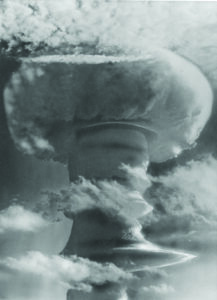

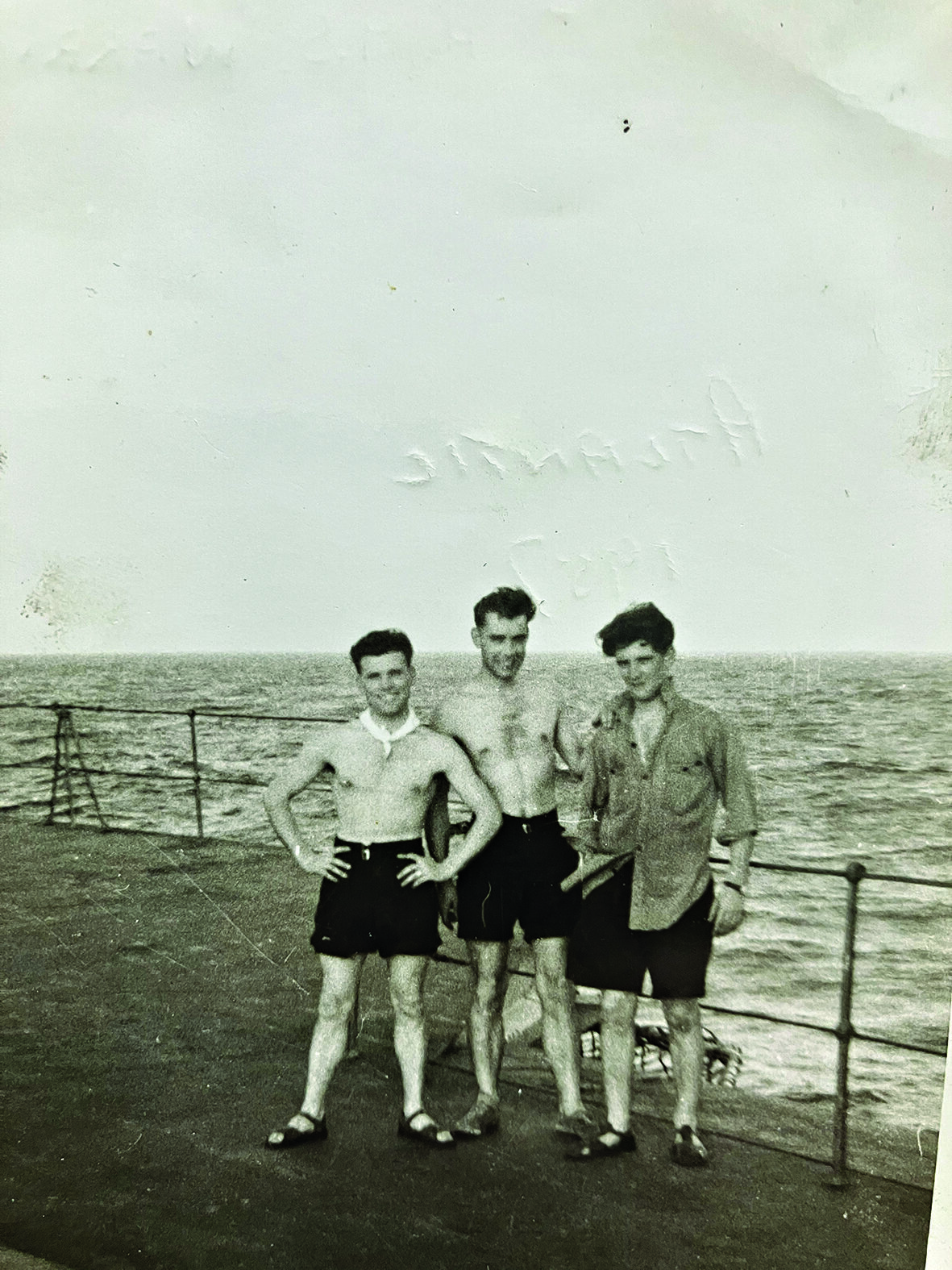
When Glynne Parry witnessed one of Britain’s first nuclear weapons tests on Christmas Island in 1957, he would never have guessed that 69 years later he would receive a medal recognising his participation in the momentous occasion, which would come to be known as ‘Operation Grapple.’
With his medal having arrived earlier this year, Mr Parry has decided to open up about the amazing piece of history he witnessed.
Born in 1935 in Wales, Mr Parry remembers the Second World War as a child, including an incident involving a German bomber dropping its excess payload at a spot near his village.
“They were tough times, but we were lucky to be living far away from most of the locations that were being heavily bombed, like Manchester,” Mr Parry said.
After completing high school, he spent time as a clerk for British Railways, though he would end up serving in the RAF as part of mandatory National Service.
“I came out of the RAF after a few months to transition into the Royal Navy, where I remained until 1964.”
“I remember being on standby for deployment during the Suez Crisis in 1956, when Egypt took control of the Suez Canal, a vital shipping lane, from the British colonial authorities. Britain responded by invading to take back control. We did not end up getting deployed, however, as the British withdrew from Egypt after a short time.”
In the 1950s, early in the Cold War, Britain was yet to develop a proper nuclear arsenal, and Russia would regularly sail ships through the English Channel as provocation. Therefore, the British commenced their own campaign of serious nuclear testing with Operation Grapple.
“We sailed for Christmas Island in February 1957, passing through Jamaica, Panama and Hawaii. The tests, when they occurred, were conducted over an uninhabited area, and we watched from the deck of our aircraft carrier. We saw this huge ball of flame, which became the stalk of a mushroom cloud. It was amazing.

“Considering that we were not that far from the blast, I’m very lucky I’ve never suffered from radiation sickness. There were many people involved in the tests who died as a result, including pilots who dropped the bombs.
“By four o’clock, seven hours after the explosions, there were almost no signs of the tests anymore, other than some wisps of smoke and some dead wildlife.”
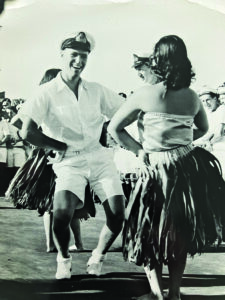
Beyond his military duties, Mr Parry remembers having a lot of fun on this journey.
He and his mates were well-received by locals on the islands they visited, where they immersed themselves in local culture, partied and enjoyed generous rations of Navy-issued rum.
He met his wife shortly before embarking on the journey to Christmas Island, and once discharged from the Navy in 1964, he would go on to have three children, and work in storekeeping, warehousing and distribution jobs. He and his family moved to Perth in 1971 as one of the later cohorts of 10-pound Pomms.
Receiving the medal so long after the event came as quite the surprise, though a welcome one.
“I’m not sure why they sent it to me almost 70 years after the event, but I heard that the UK Government is now talking about issuing compensation to all those still alive who partook in the tests, though I’m still waiting on that.”