

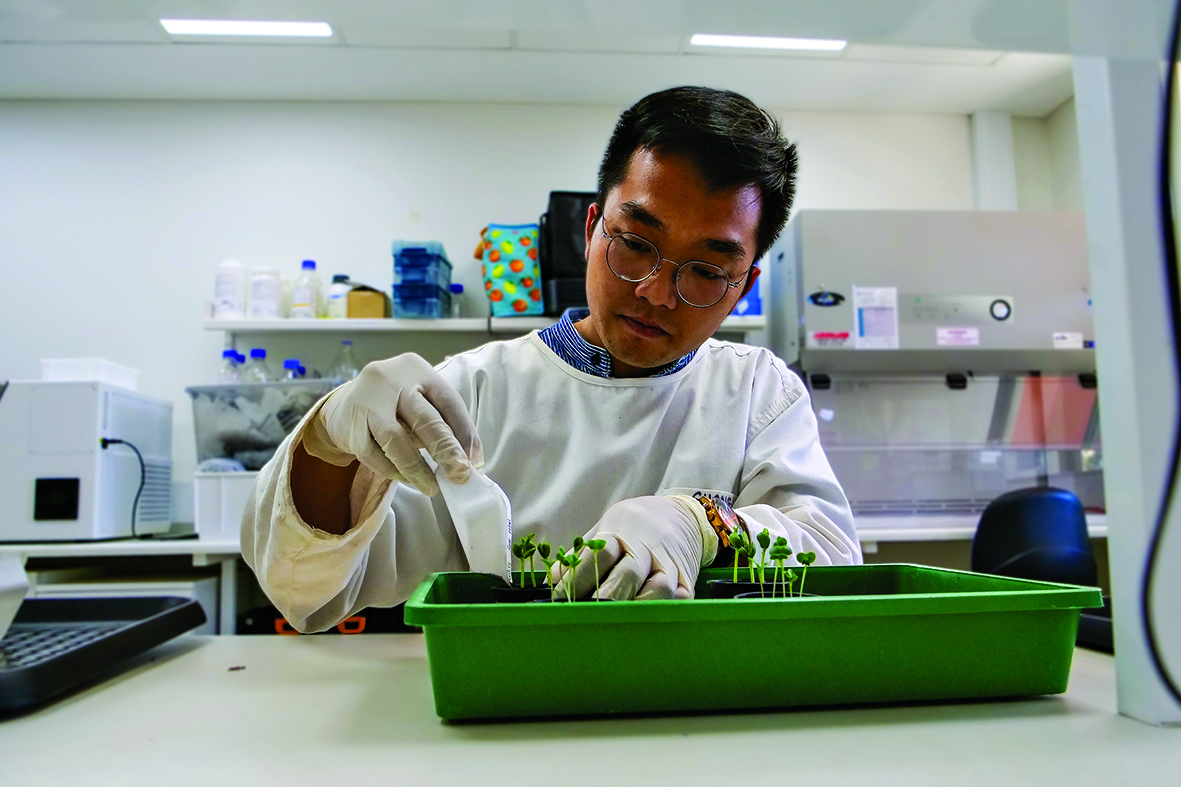
Curtin University researchers have found some agricultural soils can naturally help protect crops from one of Australia’s most damaging plant diseases.
The study focused on Sclerotinia stem rot, a fungal disease that affects broadacre crops such as canola and lupins and can cause significant yield losses.
Lead author Dr Viet-Cuong Han, from Curtin University’s Centre for Crop and Disease Management, said the research showed some soils were able to suppress the disease through naturally occurring microbes.
“We identified a soil that naturally suppresses Sclerotinia sclerotiorum by preventing the fungus from infecting plants and by inhibiting germination of its survival structures in the soil,” Dr Han said.
Researchers found disease-suppressive soils contained higher levels of beneficial microbes, particularly bacteria from the Bacillus and Streptomyces groups.
The microbes help limit the growth and spread of the fungus responsible for the disease.
According to the research team, Sclerotinia stem rot is becoming a growing concern for Western Australian farmers.
“Sclerotinia stem rot is a significant and growing problem for WA farmers, canola and pulse species, like lupins,” Dr Han said.
“In favourable seasons, it can cause substantial yield losses, sometimes more than 25 per cent, making it a major concern for crop production.”
The breakthrough came after researchers compared a disease-suppressive field with a nearby field that had a long history of Sclerotinia outbreaks.
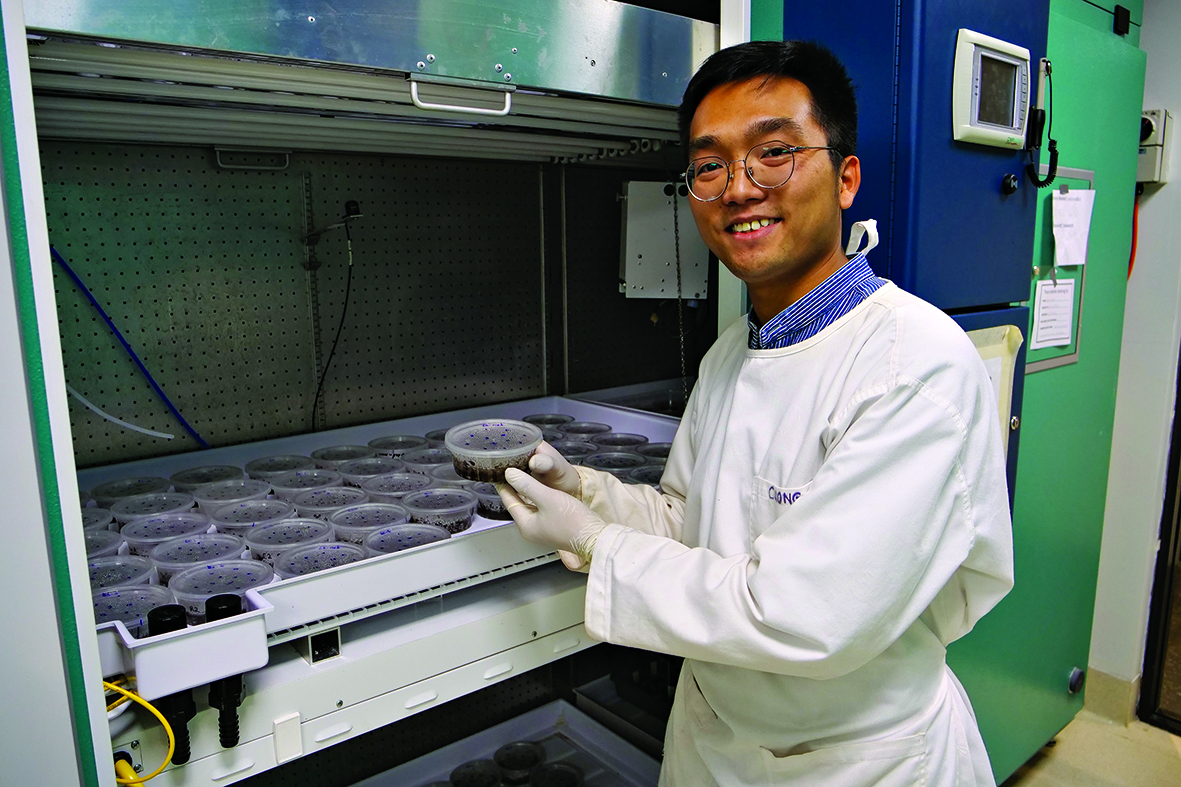
“The key moment came when we identified clear differences between a disease-suppressive field and a nearby disease-conducive field that had a long history of Sclerotinia outbreaks, based on the grower’s observations,” Dr Han said.
“When these observations aligned with our experimental results and microbial data differences, it confirmed that soil biology was playing an active role in suppressing the disease.”
Professor Sarita Bennett, co-author and Deputy Head of School Molecular and Life Sciences, said the findings highlighted the importance of soil microbial communities in crop protection.

“Sclerotinia stem rot is becoming increasingly prevalent in agricultural systems,” Professor Bennett said.
“This research shows that soil microbial communities can play a crucial role in limiting disease prevalence, providing a foundation for microbiome informed approaches to crop protection.”
The study took four years and involved field work as well as controlled laboratory experiments.
Researchers said identifying a naturally suppressive soil was one of the biggest challenges because such systems are difficult to find in the field.
Only one of the Western Australian fields examined during the study showed clear disease-suppressive characteristics.
Professor Bennett said more research was needed before the findings could be widely applied on farms.
“There is potential to reduce reliance on chemical treatments by harnessing disease-suppressive soils and their beneficial microbes,” she said.
“However, applying these insights to farming systems and reducing chemical application is still a long way off, with further research and broad scale application methods still required.”
Researchers said farmers can support beneficial soil microbes by maintaining soil health through practices such as managing organic matter, limiting unnecessary soil disturbance and following good disease management practices.
The findings were published in the journal Applied Soil Ecology.