
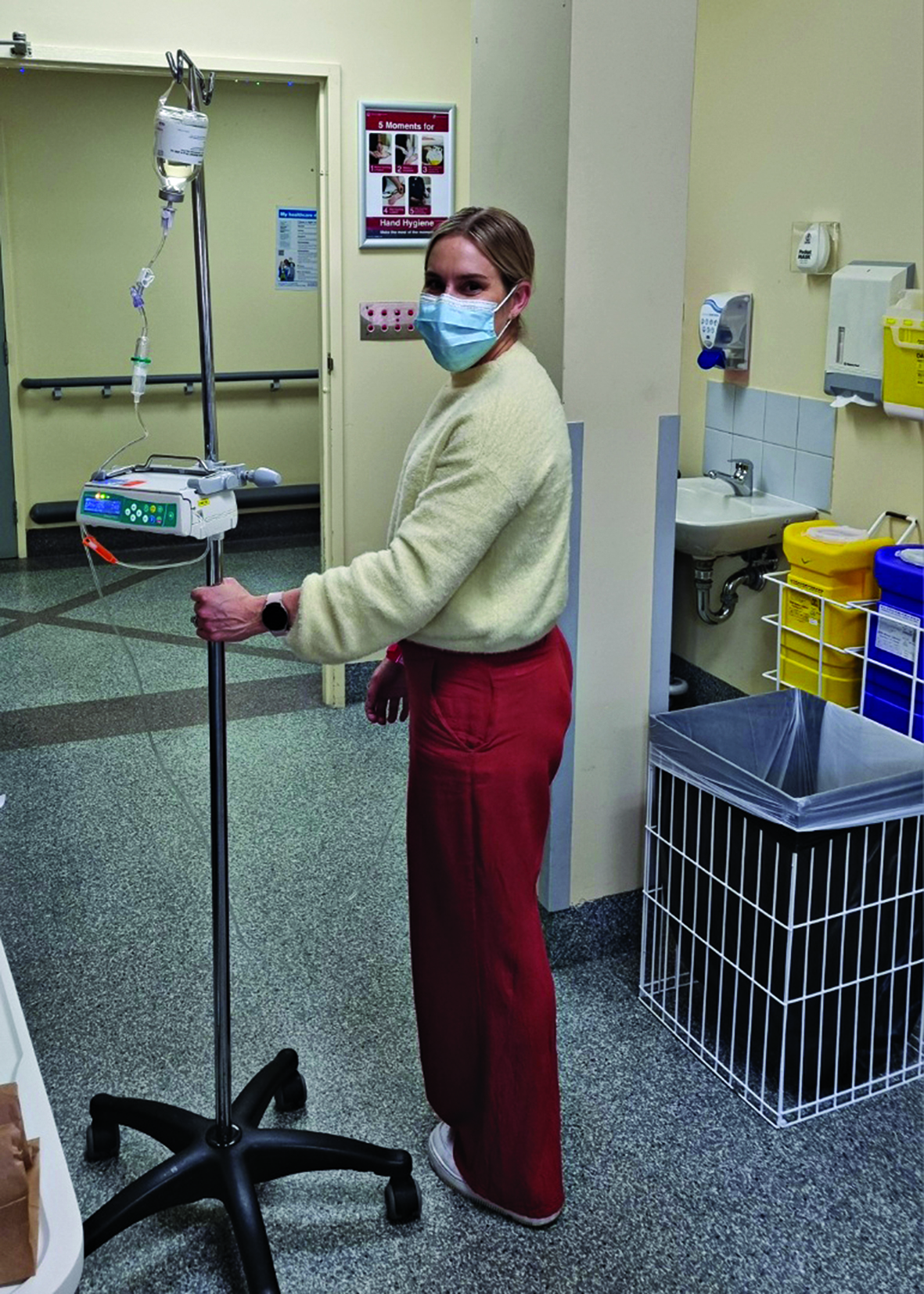
Roleystone resident Alison Johnson, who spent weeks in hospital with a rare brain condition, is now raising awareness and funds to help others avoid the same ordeal.
Mrs Johnson said she was diagnosed with Anti-GAD autoimmune encephalitis in 2024 after worsening symptoms and repeated visits to doctors who initially struggled to identify the illness.
She said her health began to decline in April 2024 after her husband returned home from a work trip with a stomach bug.
While he recovered within two days, she said her condition deteriorated.
“I was doing a lot of back-and-forth trips to the doctor,” she said.
“I did go to the emergency department once, but I didn’t get any real help there. I don’t think they thought it was anything too severe.”
In early May she was diagnosed with vertigo after experiencing balance issues.
Mrs Johnson said in the weeks leading up to the vertigo diagnosis she was also experiencing what were later identified as micro seizures, which increased in intensity.
Her husband eventually woke to find her having a tonic-clonic seizure, prompting an ambulance trip to hospital where she was initially diagnosed with hyponatremia, or low blood sodium.
“I spent a number of days in the high dependency ward before being transferred to my city’s major tertiary hospital where a number of tests including a lumbar puncture and MRI were undertaken which confirmed my diagnosis of Anti-GAD autoimmune encephalitis,” she said.
Mrs Johnson said she remembered little from her hospital stay.
“That’s pretty much where my memory stops,” she said.
Mrs Johnson said her life has changed drastically since she became ill.
“I’m unable to work at all at the moment because I’ve got double and bouncy vision,” she said.
“And I also get fatigued easily so I’ve got to manage my energy levels throughout the day.”

She credited her husband and sister for advocating on her behalf and questioning medical advice, which she said eventually led to her correct diagnosis.
“Encephalitis is such a rare and difficult illness for anyone to diagnose,” she said.
To help raise awareness, Mrs Johnson organised a fundraiser through her Kelmscott-based business for World Encephalitis Day, raising $300 for Encephalitis International.
“For me, it was important to raise money for all of the work that they are doing and the awareness they’re trying to bring around the world,” she said.
She also hopes greater understanding among medical professionals could lead to faster diagnoses.
“There’s lots of different early symptoms that could be picked up. If they looked into it more thoroughly, people might be diagnosed quicker,” she said.
Mrs Johnson urged others to seek further testing if they felt their concerns weren’t being taken seriously.
“If you’re ever unwell and don’t feel as though you’re getting the right answers, don’t be afraid to push.”
Her message comes as Encephalitis International launches a new acronym F.L.A.M.E.S.
The non-profit organisation said the acronym was designed to help public and non-specialist acute medical professionals recognise encephalitis earlier by linking the condition’s urgent warning signs to what it truly was: inflammation of the brain.
“For many people affected, it can feel as though their brain is literally on fire,” Encephalitis International said.
Encephalitis International chief executive Ava Easton said the symptoms were: flu-like symptoms, loss of consciousness, acute headache, memory problems, emotional or behavioural changes and seizures.