
The growing chorus of croaking frogs along the Araluen walk trail is a small but telling sign the landscape is slowly coming back to life.
For Armadale Gosnells Landcare Group (AGLG) senior land care officer Shane Hunter, it is one of the most rewarding indicators that years of planning, planting and patience are paying off.
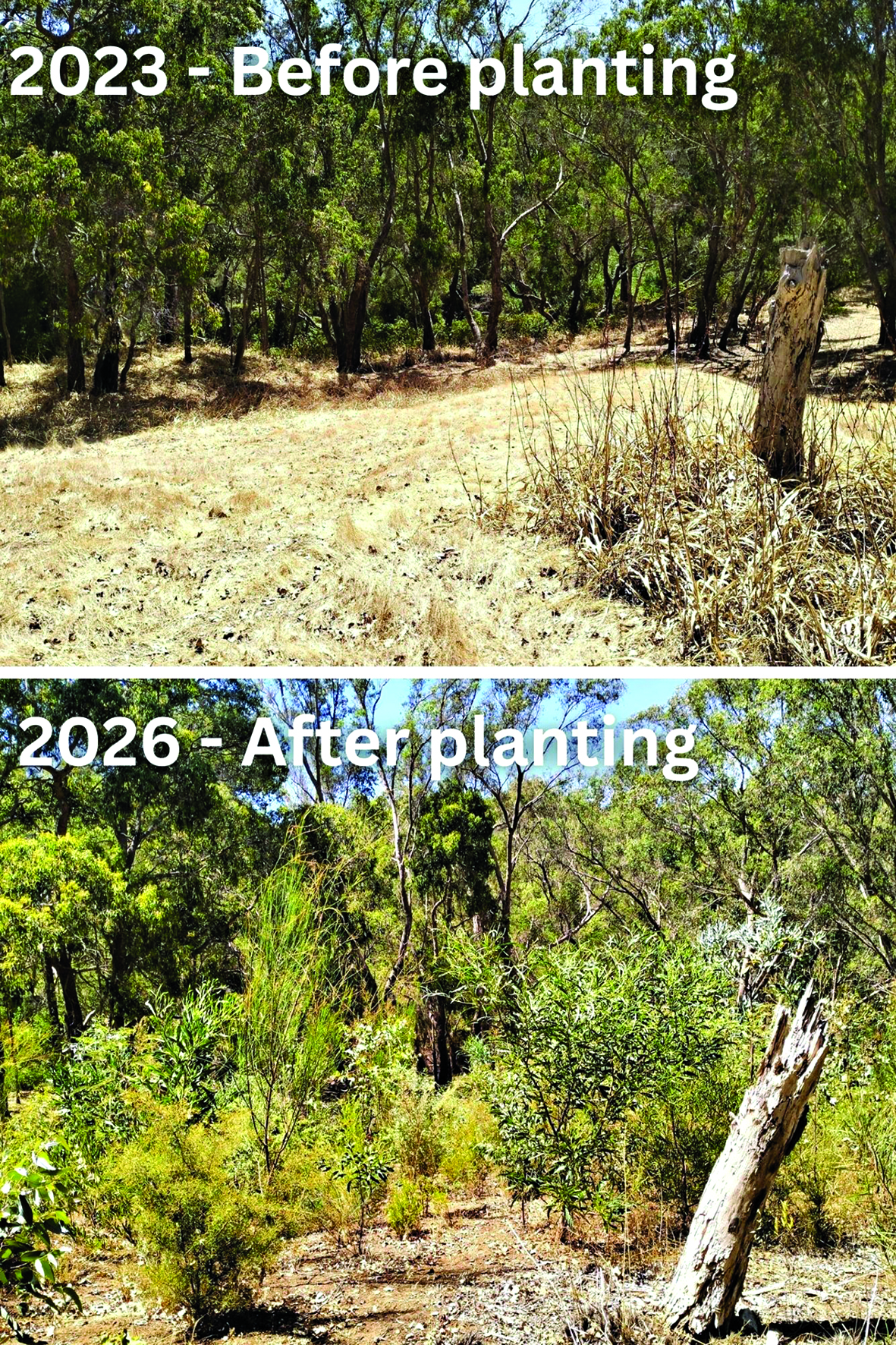
Recent before-and-after images shared by Mr Hunter highlight the transformation of the Roleystone site.
The large-scale rehabilitation project is being delivered through the state government’s Swan Canning Riverpark Urban Forest (SCRUF) program, which provided more than $350,000 in funding.
The City of Armadale has also contributed $65,000 to support the works.
The project began in 2023 and is set to continue through to 2027.
Mr Hunter said AGLG’s work was guided by two focus areas: reconnecting the community with the natural environment and doing on-ground restoration.
“We particularly focus on the rivers because the rivers are basically what we call an ecological corridor that links areas through the urban landscape,” he said.
“You can think of the Canning River as a highway for wildlife, which runs from the hills through to the coast.”
Mr Hunter said the Araluen walk trail was chosen for the SCRUF program because of its size and underutilised nature.
He said the area offered strong potential for environmental improvement through revegetation.
The space could be far better utilised by planting a diverse range of native trees and shrubs, significantly increasing habitat value and long-term environmental benefits.
“People weren’t going out there kicking soccer balls and stuff like that – it’s not like a field that you can play in or whatever,” he said.
“It was just a great opportunity to reinstate a forest,” Mr Hunter said.
Images from 2023 revealed long, barren stretches of land.

Mr Hunter said this was the legacy of earlier clearing by settlers who farmed and grazed the area for decades.
That history left lasting impacts on the ecosystem.
“The area was grazed so nothing was really coming back,” Mr Hunter said.
“The seed bank which would have been there from the original natural vegetation was lost over time because of how long it was farmed and grazed.”
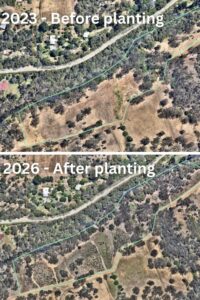
While the project is still in its early stages, subtle signs of recovery are already emerging.
Mr Hunter said large-scale wildlife movement would take time, but the return of insects and birds was noticeable.
“You definitely notice a lot more insects and the birds that follow those insects,” he said.
“There’d be reptiles and frogs moving into those areas as well. You can really hear the frogs coming back to life in some of the wetland areas.”
He said rebuilding a healthy and diverse habitat was a long-term process, requiring years of consistent effort before the full benefits were realised.
For Mr Hunter, watching the slow transformation is what makes the work worthwhile.
“I get a huge amount of satisfaction in being able to look at the sites,” he said.
“You can see the real tangible change when you’ve got the shrubs and trees popping up.”