
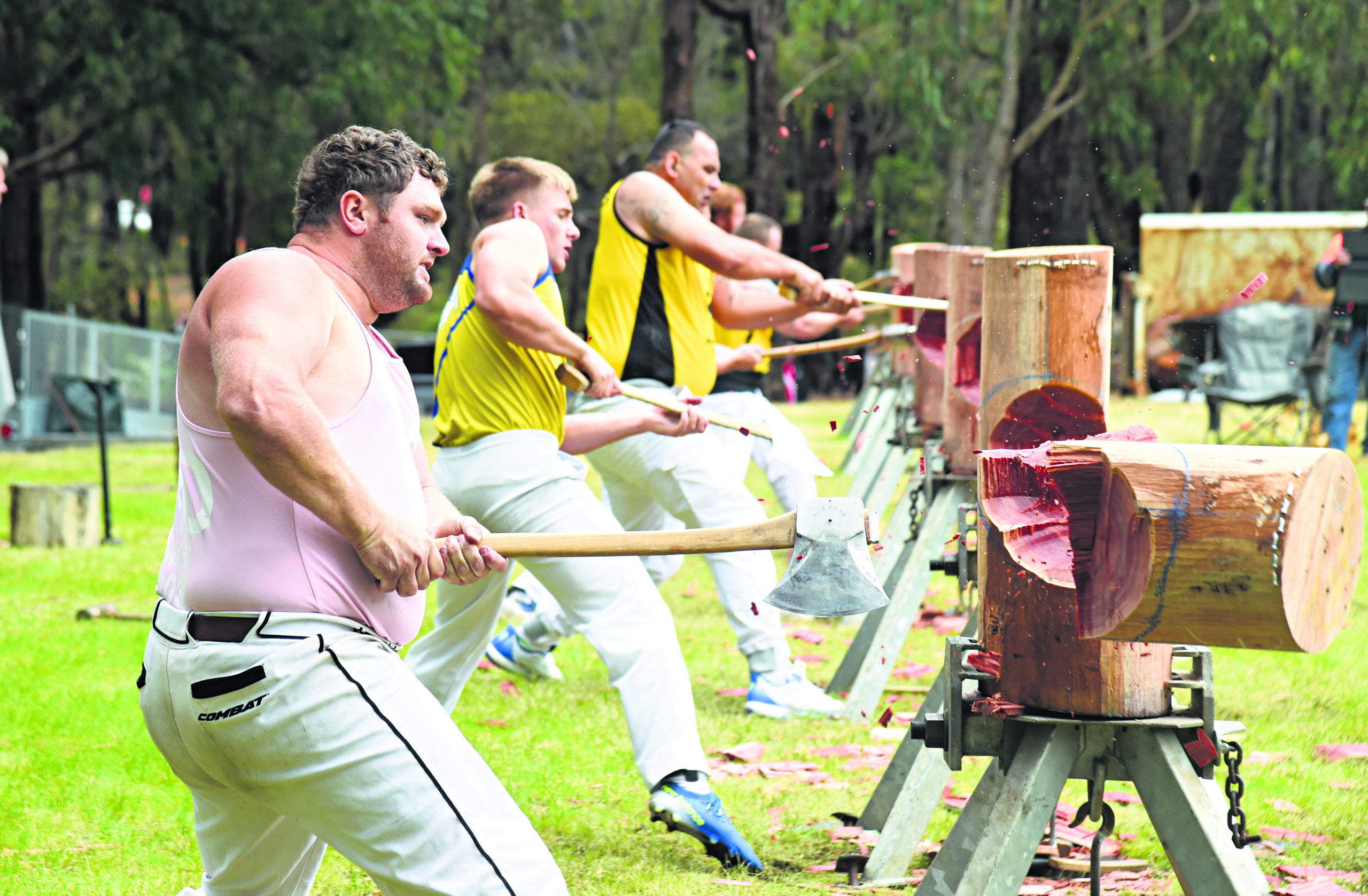
Central Districts Axemen’s Association (CDAA) competitor and assistant handicapper Alek Ashcroft says log chop events will continue to be a calendar fixture, despite the association exhausting its jarrah stock.
Mr Ashcroft said the native logging shutdown, which took effect last year, was the reason behind the timber shortage.
“The jarrah is what we used for the competition across all events,” he said.
“We did have a little bit left from before the shutdown but that’s completely gone now.”
Mr Ashcroft said the association couldn’t host the tree pegging event at the October Jarrahdale Log Chop due to the stock issue.
“It’s an event where the boys put a notch in and jump on the board. They go three more times and cut the log on top,” he said.
“We couldn’t get the long lengths of pole to run that event this year.”
A Jarrahdale Forest Protectors spokesperson said the log chop was inherent to Serpentine Jarrahdale’s history.
“It is sensible to say that the forest is not under threat from a sport that has historically used pieces of jarrah for chopping,” the spokesperson said.
“It represents an historic industry based on axe and saw – far removed from the mechanised, broadscale clearing process involved in strip mining.”
Jarrahdale Forest Protectors spoke with a Serpentine Jarrahdale axeman and were told competition hosts had moved towards plantation blue gum and mountain ash.

“We can get jarrah but (we) don’t get to choose the logs,” the axeman said.
“If we ask for 100 tonne, we get what we are given and still have to pay royalty to the government for wood we don’t use.
“Plus, the harvester, when it cuts the tree, down strips the bark off them so they dry out too quick before we can have them delivered.”
The spokesperson said the sport was far removed from the mechanised, broadscale clearing process involved in strip mining.
“We applaud their use of plantation timber and can understand the frustration of not being able to access the timber they once could,” the spokesperson said.
Mr Ashcroft said the stock shortage was experienced Australia-wide.
“We’re lucky we can still get timber (in WA),” he said.
“Places like Victoria, they’re really struggling at the moment. They’re actually importing wood from Queensland or Tasmania for the Melbourne show.
“It’s impacting the sport right across.”