
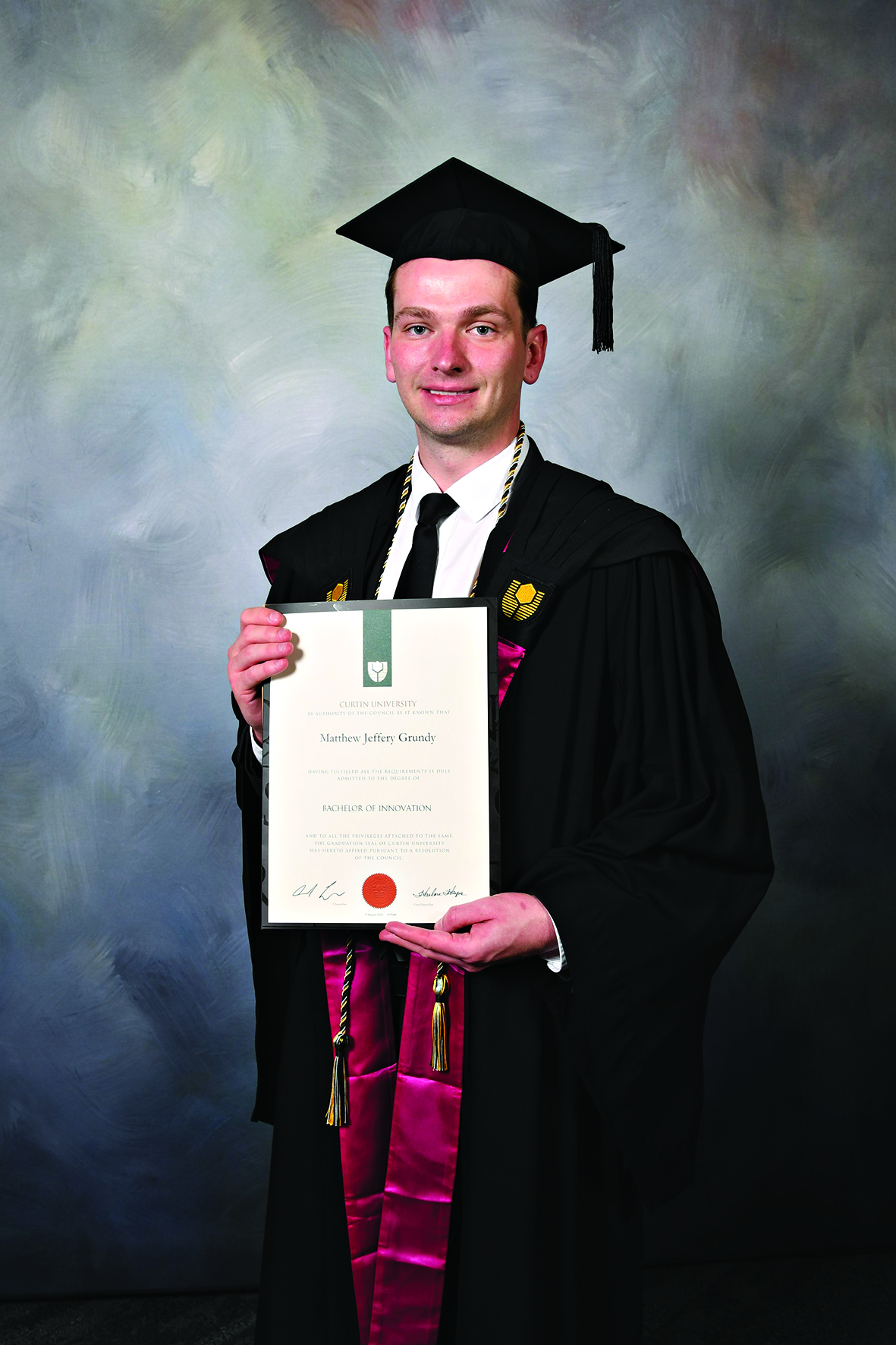
Being the first person to graduate from a university degree comes with an unusual problem – few employers know exactly what to make of it.
That is something Matthew Grundy has already encountered.
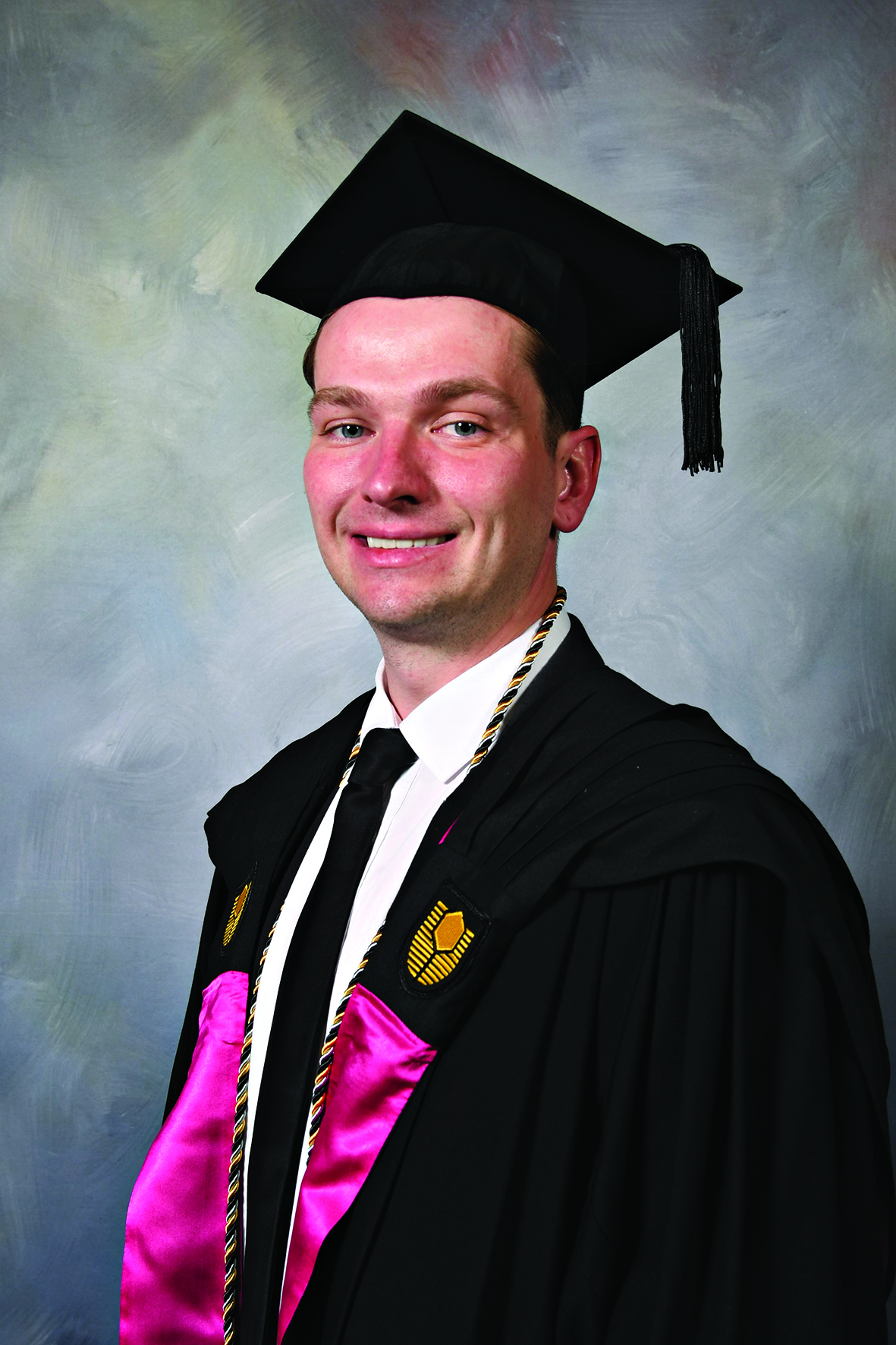
The 27-year-old has become Curtin University’s first Bachelor of Innovation graduate after completing the three-year course ahead of schedule while working full-time in marketing.
Mr Grundy said being the first came with some nerves, particularly when it came to how the qualification would be viewed outside university.
“The biggest challenge has probably been having people dismiss my credentials simply because they do not fully understand what a Bachelor of Innovation is,” he said.
“I can understand that to an extent because there have not been previous graduates for people to look at and say, ‘This is what an Innovation graduate can do.’ That is something I want to change.”
Because the degree was new, he knew there was some uncertainty involved.
“I wasn’t looking for a completely predetermined path,” he said.
“I wanted something that would challenge me to think differently and give me experiences I could carry into my career.”
Mr Grundy entered university as a mature-age student and initially felt he was catching up with friends and colleagues who had already completed their studies.
That changed as he progressed through the course.
He took part in overseas study opportunities and decided he wanted to make the most of university rather than simply finish as quickly as possible.
He still accelerated his studies, taking six units in his final semester while balancing full-time work and his social life.
“By that point, I was so close to the finish line that I wanted to challenge myself and see whether I could handle the additional workload,” he said.
“It was not really about finishing earlier. It was more about testing myself and seeing what I was capable of.”
One of his standout experiences was the Business Innovation Lab, where his team developed Rally Fitness, a proposed social fitness app that would allow people to create and join activities including soccer games and running clubs.
Mr Grundy went beyond the classroom exercise and developed a minimum viable product to test the concept with potential users.

“What I enjoyed most was that we were not just talking about innovation in theory. We were actually building something,” he said.
Mr Grundy’s career has followed a similarly unconventional route.
He began in financial services as an account manager but wanted to move into marketing. He repeatedly contacted his company’s Head of Marketing asking for an opportunity to gain experience.
That persistence eventually led to two mornings a week with the marketing team and later a full-time Campaign Specialist role.
He has since worked with a technology start-up and now manages marketing across a hospitality venue and several automotive dealerships.
“You do not need to wait for the opportunity to come to you. You need to create the opportunity,” he said.
Curtin Vice-Chancellor Professor Harlene Hayne said Mr Grundy’s graduation was an example of the curiosity, adaptability and entrepreneurial thinking the university wanted students to develop.
Bachelor of Innovation course lead Dr Mike Burbridge said the degree was created for a job market where career paths were changing rapidly.
“The degree gives students the skills and knowledge to tackle complex problems, and the confidence to implement their solutions, whatever direction their career takes,” Dr Burbridge said.
Mr Grundy will next begin an MBA and hopes to move further into strategy, business development and leadership.
He would also like to start his own business one day, although he has not decided what that will be.
Being Curtin’s first Innovation graduate means his next steps could also influence how the qualification is viewed by employers and future students.
“I think being the first graduate means I have a responsibility to represent the degree well,” he said.
“If I can establish myself professionally and demonstrate the value of the skills I have developed, hopefully the students who graduate after me will not have to face the same uncertainty about how their qualification is perceived.”