
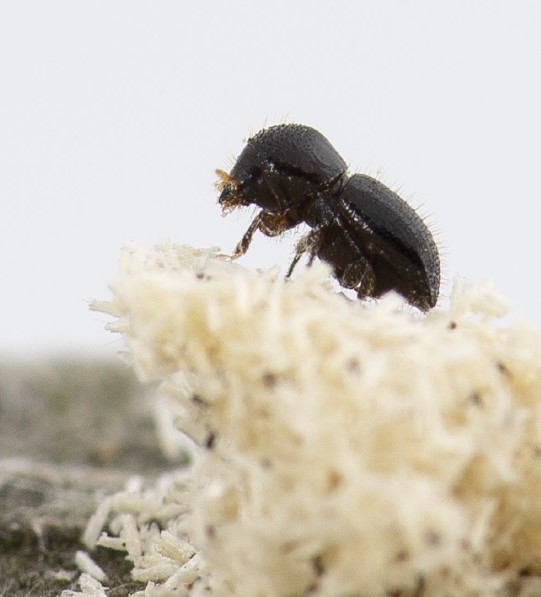
The State Government has released two funding streams to assist Local Governments with Polyphagous shot-hole borer (PSHB) management and recovery.
The devastating invasive pest, native to Southeast Asia, was first detected in Perth in 2021, after having caused extensive damage to woodland and crops in India, the US, Israel and South Africa. It has, however, been contained in the Perth area, and there has been no detection in the rest of the state, thanks to strict quarantine rules in Perth’s two designated zones.
Besides the damage it causes boring tunnels into trees, the beetle introduces a symbiotic fungus into its host that destroys the tree’s water and nutrient-conducting vessels, leading to its eventual death.
The City of Canning had previously suffered from a significant outbreak, leading to the felling of 48 local trees, and significant pruning of others, as reported in The Examiner’s June 5 2025 issue.

It was in the same month that the State Government decided that a campaign of eradication was no longer technically feasible. Thus, the current strategy of management and slowing the spread has now been adopted.
Funding for the 31 Local Governments in the PSHB Quarantine Area, all of which are located in the greater metropolitan Perth area, was made available.
Funds support tree replacement following removal due to PSHB infestation and proactive planting programs that build additional canopy cover to futureproof against current or potential PSHB infestation.
Funding of up to $120,000, excluding GST, for the 30 Local Governments in the PSHB Management Zone is currently available through an online application process.
These funds support a range of PSHB management activities, including tree mapping, tree treatment and removal, community education, and provision of assistance to residents. Applications for this program close on Monday 8 June.